
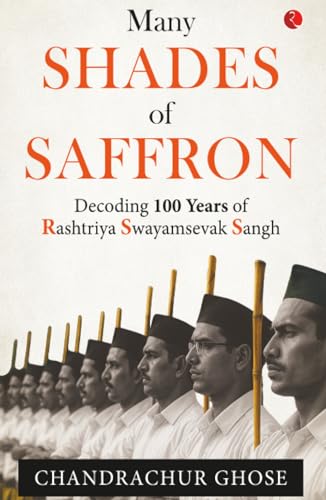
Many shades of saffron: decoding 100 years of rashtriya swayamsevak sangh
Material type: TextPublication details: New Delhi Rupa Publications 2025Description: 404 pISBN:
 - 9789370033795
- 324.254 GHO
| Item type | Current library | Call number | Status | Date due | Barcode | Item holds |
|---|---|---|---|---|---|---|
 Books
Books
|
Gandhi Smriti Library | 324.254 GHO (Browse shelf(Opens below)) | Available | 185392 |
Is the Rashtriya Swayamsevak Sangh (RSS) an upholder of traditional Indian values, or is it a threat to the democratic, pluralist and secular idea of India? A large body of scholarship on the Sangh, its leaders and its activities has emerged in recent decades. However, an overwhelming share of that scholarship reflects a deep ideological division, either being in favour or against the Sangh. T he consequence of this feature of the existing scholarship is twofold. Firstly, most of the literature focuses on specific aspects or periods of the Sangh’s activities, often narrowing down to acts of key leaders interpreted either as heroic or as condemnable. Therefore, many of the Sangh’s activities and parts of its history remain outside the scope of the narrative. The second result flows from the first in a way. It is striking that despite having been around for a century, there is such widespread lack of informed public opinion about the Sangh. The impact of a scarcity of dispassionate narration becomes evident from the prejudiced reaction that the mention of the Sangh evokes.
Many Shades of Saffron attempts to bring to readers a fuller story of the RSS and the role it has played in the context of the broader history of the country during the past century. Completing a hundred years by itself can be considered an achievement for any organization, but to have survived and grown in influence by negotiating diverse challenges, particularly official hostility for the most part, makes for a fascinating story. The book traces the leadership styles and visions of the sarsanghchalaks, as well as the attitude of the Sangh to the political developments through different decades and its ideological evolution.
There are no comments on this title.